How to Plan Fuel Stops Effectively: A Strategic Logistics Guide
In the realm of long-haul logistics and continental travel, the refueling stop is often dismissed as a secondary concern—a brief, necessary interruption in the pursuit of a destination. However, this perspective overlooks the complex interplay of geography, economics, and mechanical efficiency that defines a successful journey. Fuel management is, in fact, the central nervous system of transport logistics. When managed poorly, it introduces significant financial leakage, increases mechanical wear, and creates vulnerabilities in safety. When mastered, it becomes a powerful lever for optimizing both time and capital.
The modern landscape of fueling is defined by extreme price volatility and a widening gap in infrastructure quality. In North America and Europe, the price delta between fuel stations located only miles apart can exceed 20%, driven by local tax jurisdictions, land-use costs, and corporate branding strategies. For a commercial operator or a meticulous traveler, these variations represent more than just a nuisance; they are a direct challenge to the viability of long-term travel budgets. To navigate this, one must move beyond the “empty light” mentality and adopt a more forensic approach to energy replenishment.
Mastery of this domain requires a sophisticated understanding of “net-effective” fuel costs, which account for the opportunity cost of the time spent off-road and the efficiency lost during the deceleration-acceleration cycle. As we move toward a future that includes hybrid energy sources and diversified fuel types, the complexity of this planning only increases. This article provides a comprehensive editorial analysis of the frameworks and strategies necessary to transform fueling from a reactive habit into a disciplined logistical advantage.
Understanding “How to plan fuel stops effectively”
To grasp how to plan fuel stops effectively, one must first dismantle the oversimplification that fueling is merely a binary state of being “full” or “empty.” This discipline is actually a three-dimensional optimization problem involving volume, location, and timing. The goal is not simply to find the lowest price per gallon, but to identify the specific geographical nodes where high-quality fuel, competitive pricing, and minimal route deviation intersect.
A multi-perspective view reveals that “effective” means different things depending on the scale of operation. For a solo traveler, effectiveness might be defined by the quality of the rest facilities and the safety of the location. For a fleet manager, it is defined by the “IFTA” (International Fuel Tax Agreement) implications and the reduction of out-of-route mileage. The risk of oversimplification here lies in ignoring the “unseen” variables, such as the fuel consumed while idling in a congested station queue or the aerodynamic cost of carrying a maximum fuel load over steep mountain passes.
The complexity of the task is further magnified by the “information lag” in digital tools. While many mobile applications provide real-time pricing, they often fail to account for the reliability of the pumps, the availability of specialized additives (like Diesel Exhaust Fluid), or the psychological fatigue of the operator. True effectiveness is achieved when the stop is integrated into the natural rhythms of the journey—aligning with mandatory rest periods, meal requirements, and vehicle inspections—rather than occurring as a disruptive emergency.
The Evolution of Fuel Distribution and Pricing Models
The history of fuel stops is a narrative of increasing corporatization and data-driven pricing. In the early 20th century, fuel was a standardized commodity sold at fixed prices. Today, fuel stations are sophisticated retail centers where the fuel itself often functions as a “loss leader” to attract customers to high-margin convenience goods. This shift has led to the “interstate premium,” where stations located within a half-mile of major highway exits charge significantly more than those located slightly further inland.
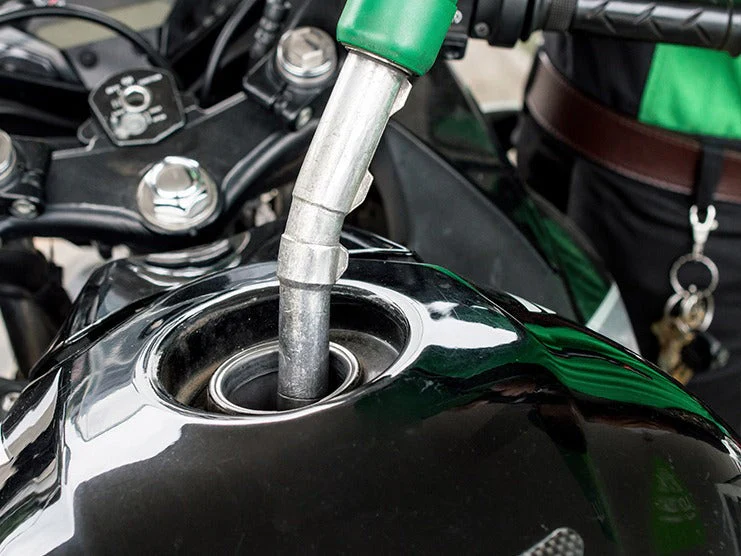
Furthermore, the rise of “just-in-time” fuel delivery systems means that station prices now fluctuate multiple times a day in response to global oil market shifts. This volatility makes planning difficult for those operating on fixed budgets. Understanding that you are participating in a global commodity market every time you pull up to a pump is the first step in developing a defensive logistical posture.
Conceptual Frameworks for Fuel Management
Strategic fueling requires mental models that prioritize long-term efficiency over immediate gratification.
1. The “Golden Buffer” Rule
Never plan a stop based on the vehicle’s maximum range. Instead, define a “safety buffer”—typically 15–20% of the tank capacity. This buffer is not for use; it is the currency you use to “buy” your way past an overpriced or unsafe station to reach a better one 50 miles away.
2. The “Weight-to-Price” Equilibrium
Fuel is heavy. For heavy-duty vehicles, a full load of fuel can weigh over 2,000 pounds. Carrying this weight consumes more fuel. If the price difference between Station A and Station B is negligible, it is often more efficient to “short-fill” to maintain a lighter vehicle weight, provided the next stop is guaranteed.
3. The Deceleration-Acceleration Penalty (DAP)
Every time a vehicle leaves the highway, it loses kinetic energy. Bringing a 40-ton truck or even a 2-ton SUV back up to cruising speed consumes a significant amount of fuel. If a cheaper station requires a 5-mile detour with multiple stoplights, the DAP often negates the price savings.
Categories of Fueling Environments and Trade-offs
Identifying the environment is crucial for anyone learning how to plan fuel stops effectively.
| Category | Primary Benefit | Primary Risk | Ideal Use Case |
| High-Volume Truck Stops | Fresh fuel, high flow, DEF available | Congestion, higher price | Commercial long-haul |
| Urban Retail Stations | Competitive pricing | Tight turning radii, limited space | Local/Last-mile delivery |
| Rural “Island” Stations | Only option in “fuel deserts” | Stale fuel, poor maintenance | Emergency only |
| Warehouse/Club Centers | Lowest base price | Long queues, no specialized fuel | Personal/Budget travel |
| Card-Lock/Private Fleet | Transparency, automated logging | No amenities, remote locations | Institutional fleets |
Decision Logic for Station Selection
The hierarchy of choice should follow: Fuel Quality > Safety > Net Price > Amenities. A cheap price at a station with a history of water-contaminated tanks is a high-risk gamble that can lead to catastrophic engine failure.
Real-World Scenarios: Logistics and Decision Logic
Scenario A: The Mountain Pass Traverse
A driver is approaching a 50-mile steep ascent with 25% fuel remaining.
-
Decision Point: Fill up at the base at a premium price or risk the crossing to find cheaper fuel on the descent?
-
Failure Mode: Attempting the climb with a low tank. Fuel sloshing in the tank on a steep grade can cause the fuel pump to suck air, leading to a stall in a dangerous location.
-
Optimal Logic: Pay the premium at the base. The cost of a tow on a mountain pass is 100x the fuel savings.
Scenario B: The Cross-Border Tax Arbitrage
An operator is moving between two states with a $0.40 per gallon difference in fuel tax.
-
Decision Point: To fill up just before the border or just after?
-
Second-Order Effect: If the state with the higher tax has better-maintained roads or more efficient routing, the “out-of-route” miles to get to the cheap fuel might be a net loss.
-
Optimal Logic: Use a fuel-optimization tool that accounts for tax-adjusted “net” pricing, which often differs from the “pump” price.
Economic Dynamics: The Net-Effective Cost of Energy
The true cost of fuel is not what is printed on the receipt. It is a calculation of the “Net-Effective Cost.”
Calculation Matrix for Refueling
| Variable | Impact on Cost | Mitigation Strategy |
| Out-of-Route Miles | $0.50 – $2.00 per mile | Keep detours under 2 miles |
| Time (Driver Wage) | $20 – $40 per hour | Align fueling with meal breaks |
| Idling/Queue Time | 0.5 – 1.0 gal per hour | Use high-flow satellite pumps |
| Loyalty Surcharges | – $0.05 to $0.10 per gal | Use fuel cards, not credit cards |
For a vehicle getting 10 MPG, a 10-mile detour to save $0.10 per gallon on a 100-gallon fill-up ($10 total savings) actually costs you money when you factor in the gallon of fuel used for the detour and the 20 minutes of lost time.
Support Systems and Analytical Tools
-
Fuel Optimization Software: Systems that ingest route data and current market prices to suggest specific “buy” locations.
-
Fleet Fuel Cards: These provide access to “wholesale-plus” pricing, which is significantly lower than the retail price advertised on the street.
-
Real-Time Telemetry: On-board computers that track real-time MPG, allowing drivers to adjust their “next stop” based on actual consumption rather than estimates.
-
Community-Sourced Apps: Useful for verifying “real-world” conditions, such as broken pumps or closed restrooms.
-
Digital Receipt Management: Essential for auditing fuel economy and claiming tax rebates (especially IFTA for commercial drivers).
-
Satellite Imagery: Used to “pre-scout” a station for accessibility, ensuring a large vehicle won’t get trapped in a small lot.
Risk Landscape: Contamination and Infrastructure Failure
The “hidden” risk in fueling is the degradation of the fuel itself. Underground storage tanks (USTs) are prone to water ingress and microbial growth (“diesel bug”).
Taxonomy of Refueling Risks:
-
Mechanical Risk: Low-quality fuel causing injector clogging or DPF (Diesel Particulate Filter) soot buildup.
-
Financial Risk: Fraudulent “skimming” devices at unmonitored pumps.
-
Operational Risk: “Dry runs” where a planned station is unexpectedly out of fuel due to supply chain disruptions.
Avoidance of these risks is a core component of how to plan fuel stops effectively. High-volume stations are generally safer because their inventory “turns over” quickly, leaving less time for contamination to settle or water to accumulate.
Long-Term Governance and Adaptive Protocols
For the professional, fuel planning is a cycle of continuous improvement. It requires a “governance” mindset.
The Layered Maintenance Checklist
-
Post-Trip Audit: Compare planned fuel costs against actual spend. Where did the “leakage” occur?
-
Vehicle Calibration: Ensure the fuel gauge and trip computer are accurate. A 5% error in a fuel gauge can lead to a “dry tank” scenario even when the needle shows a margin.
-
Station Blacklisting: Maintain a personal or organizational list of stations with poor access, slow pumps, or safety concerns.
Measurement, Tracking, and Evaluation
The success of a fueling strategy is measured by the Refueling Efficiency Score (RES).
A decreasing RES over time indicates a mastery of the logistical landscape.
Qualitative Signals:
-
Stress Levels: Does the driver feel anxious about fuel levels in the final hour of a stint?
-
Mechanical Health: Are fuel filters being changed at the expected intervals, or are they prematurely “blackened” by poor-quality fuel?
Common Misconceptions in Fuel Planning
-
Myth: “Always fill up in the morning when the fuel is colder/denser.”
-
Correction: Underground tanks are highly insulated; the temperature variance is negligible and does not justify a 4 AM wake-up call.
-
-
Myth: “Premium fuel always gives better mileage.”
-
Correction: If the engine is not tuned for high-octane, the extra cost is essentially a 100% loss. Use the manufacturer-recommended grade.
-
-
Myth: “Running on empty is bad because it ‘sucks up the gunk’ at the bottom.”
-
Correction: The fuel pickup is always at the bottom. The real risk is the fuel pump overheating, as it relies on being submerged in fuel for cooling.
-
-
Myth: “The cheapest gas is always at the grocery store.”
-
Correction: Often true for personal vehicles, but these stations are rarely designed for the throughput or turning radius of larger logistical assets.
-
Synthesis of Final Editorial Judgment
Effective fuel management is the hallmark of the professional traveler and the disciplined logistician. It is a rejection of the “impulse buy” in favor of the “planned acquisition.” By viewing fuel as a strategic resource rather than a commodified chore, one can unlock significant efficiencies that compound over the life of a vehicle or the duration of a career.
The ability to look ahead 300 miles and see not just a road, but a series of energy-replenishment nodes, is what separates the expert from the amateur. In a world of tightening margins and environmental scrutiny, the discipline of how to plan fuel stops effectively remains one of the most reliable ways to maintain control over the variables of the journey. The goal is to ensure that the vehicle remains a tool of progress, never a victim of its own consumption.